
Systems compared · Houston
Commercial Roofing Systems Compared for Houston Buildings
Every roofing contractor has a favourite system and it is usually the one their crews install fastest. Here are all seven, with what each one is actually good at and where each one falls over.
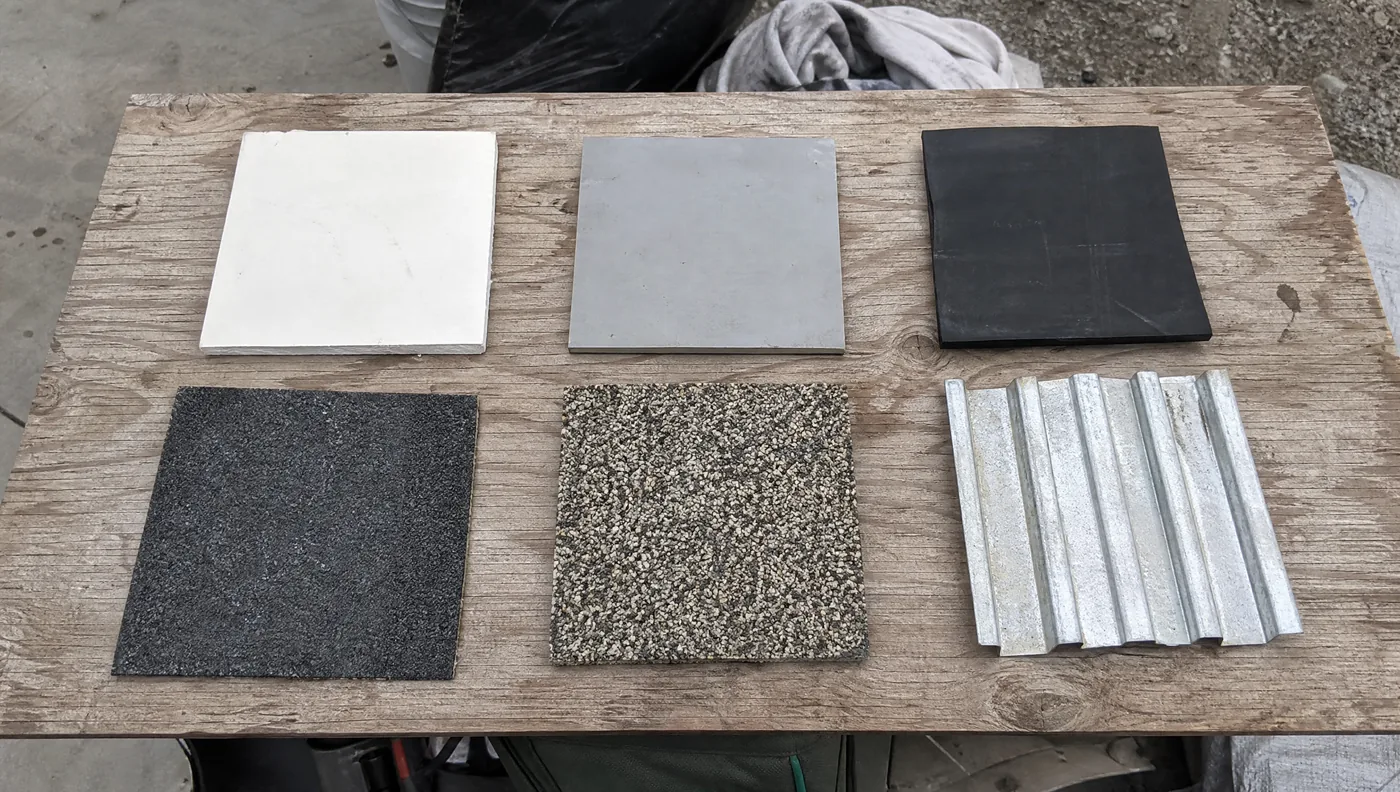
There are seven commercial roofing systems in general use on Houston buildings: TPO, PVC, EPDM, modified bitumen, built-up, metal and restoration coatings. TPO is on most of them and that is a defensible default in a cooling-dominated climate.
The choice is decided by four questions about your building, in this order: what lands on the roof, what walks on it, is the space underneath conditioned, and how long are you holding the asset. Price comes fifth, which is not what anybody wants to hear and is nonetheless the order that produces roofs that last.
The decision
A four-question decision, in order
1. What lands on the roof? Grease, animal fat, oils or chemical exhaust means PVC, and it overrides everything below. TPO degrades on contact with them. This single question disqualifies the default answer for restaurants, commissaries, food plants and a good deal of process industry, and it is the question least often asked.
2. What walks on it? Regular foot traffic and rooftop equipment service means 80 mil rather than 60, or modified bitumen, and walkway pads on every service route regardless. Punctures from technicians and dropped tools are one of the most common single-ply failures we repair.
3. Is the space underneath conditioned? If yes, reflectivity is worth money every summer in climate zone 2A and a white membrane wins. If no, that argument largely disappears and black EPDM comes back onto the table on its own merits.
4. How long are you holding the building? A five-year hold and a thirty-year hold justify completely different roofs. On a long hold, cost per square foot per year is the number that matters and standing seam metal and restoration coatings both look far better on that basis than they do on the headline.
Then, and only then, price.
Single-ply
The three single-ply membranes
TPO
Thermoplastic polyolefin. White, reflective, hot-air welded seams, $6.50 to $9.50 a square foot at 60 mil. The Houston default and rightly so. Strong on reflectivity and cost, weak on puncture resistance and completely dependent on weld quality. Not owner-repairable. Meets ASTM D6878. Full detail on TPO.
PVC
Also hot-air welded and also white, and chemically quite different. $8.00 to $13.00 at 60 mil. Resists grease, oils and chemical exposure, which is its entire reason for existing on a commercial building. Also the most flexible in cold and the best on complex, heavily penetrated roofs. More expensive, and worth it on the buildings that need it. Note that PVC and TPO cannot be welded to each other, which matters on phased work.
EPDM
Synthetic rubber, black, seams made with factory-applied tape. $6.00 to $9.50 at 60 mil. The toughest of the three against punctures and the only one your own maintenance team can realistically patch. The problem in Houston is thermal: black membrane in this climate over conditioned space is a cooling cost you pay every August. Genuinely good on unconditioned buildings and on roofs that take abuse. PVC and EPDM in detail.
Talk to a roofer
Not sure which of these your building wants?
Answer the four questions at the top of this page and it usually narrows to two. Call and we will work through it, and we install all seven so we genuinely do not mind which one it lands on.
Call (281) 720-3785- A roofer picks up, not a call centre
- Line-item written scope before anything is torn off
- Progress billing tied to milestones, never 85% up front
Side by side
Seven commercial roofing systems compared
The cost-per-year column is the one worth reading. It is what makes standing seam metal and restoration coatings look completely different from how they look on the headline price.
| System | Cost / sq ft | Life | Cost / sq ft / yr | Reflective | Owner-repairable | Best for |
|---|---|---|---|---|---|---|
| TPO, 60 mil | $6.50 – $9.50 | 20 – 25 yr | $0.29 – $0.40 | yes | no | warehouses, retail, offices |
| PVC, 60 mil | $8.00 – $13.00 | 20 – 30 yr | $0.32 – $0.48 | yes | no | kitchens, food plants, chemical exhaust |
| EPDM, 60 mil | $6.00 – $9.50 | 20 – 25 yr | $0.27 – $0.40 | no | yes | unconditioned, high abuse |
| Modified bitumen | $7.00 – $11.50 | 18 – 25 yr | $0.33 – $0.53 | partly | yes | foot traffic, redundancy |
| Built-up, 4 ply | $9.50 – $13.50 | 20 – 30 yr | $0.38 – $0.53 | no | yes | traditional specs, heavy assemblies |
| Standing seam metal | $13.00 – $19.00 | 40 – 60 yr | $0.27 – $0.38 | partly | no | long holds, sloped roofs |
| Silicone restoration | $2.75 – $4.75 | 10 – 15 yr | $0.22 – $0.38 | yes | no | sound, dry existing roofs |
Cost ranges collected from Houston commercial quotes and supply pricing in July and August 2026, all including tear-off and code-required insulation except the restoration row. Service life assumes a maintained roof with walkway pads on service routes; an unmaintained roof loses roughly a quarter to a third of it.
Asphalt and metal
Asphalt systems, metal, and the option that is not a new roof
Modified bitumen
Two-ply asphalt, base and cap, in APP or SBS. $7.00 to $11.50. Redundancy is the argument: a puncture through the cap does not put water in the building. Repairable by anybody with materials from any supply house, which over twenty years is worth real money. In Houston, specify SBS self-adhered rather than APP torch, because most sites will not permit open flame. Mod bit in detail.
Built-up (BUR)
Three or four plies of felt in asphalt, gravel surfaced. $9.50 to $13.50 new. Maximum redundancy, maximum weight, slowest to install, and rarely specified new any more because modified bitumen delivers most of the benefit at less weight. What matters about BUR in Houston is that thousands of buildings still have one, many of them are still serviceable, and tearing one off costs roughly double what a single-ply tear-off does because of the disposal weight. BUR in detail.
Metal
R-panel at $8.50 to $15.00 depending on gauge, standing seam at $13.00 to $19.00. Standing seam is the longest-lived roof available, 40 to 60 years, and on cost per year it is competitive with everything else on this page. Exposed-fastener R-panel is cheaper and leaks at the fasteners eventually. Metal wants slope and does not forgive being installed below its minimum pitch. Metal in detail.
Restoration coating
$2.75 to $4.75 for silicone, $3.50 to $6.50 for a metal restoration system. Not a new roof, and on a dry, structurally sound roof it is the best value on this page by a distance, and by cost per square foot per year it beats everything. The condition is absolute: the substrate has to be substantially dry, and establishing that costs $500 to $1,000. Coatings in detail.
Getting it specified
What a specification should actually say
Whichever system you pick, the specification is what determines whether you get twenty years out of it. A bid that names a system and a price and nothing else has told you almost nothing.
What should be written down:
- Membrane manufacturer, product and mil thickness.
- Insulation type, thickness and total assembly R-value, with a statement that it meets the current energy code.
- Cover board, where one is specified, and what it is.
- Attachment method and fastening pattern, including enhanced perimeter and corner fastening.
- Edge metal specification, ideally ANSI/SPRI ES-1 compliant.
- Drainage: tapered layout, crickets, sumps, overflow provision.
- Walkway pad locations on service routes.
- Warranty type, term, issuer and the wind speed exclusion.
- Deck replacement unit rates.
- Permit responsibility, and whether the fee is included.
Take that list to every bidder. The one who answers all ten without hesitating is usually the one you want, more or less regardless of which system they recommended.
Buildings we cover
Commercial roofing system design and installation across the Houston metro:
Commercial roofing in Bellaire, Stafford commercial roofing, commercial roofers in Pasadena, Channelview, TX, Commercial roofing in Humble, Deer Park commercial roofing, commercial roofers in Katy, Sugar Land, TX, Commercial roofing in Cypress, Spring commercial roofing, commercial roofers in La Porte, Baytown, TX, Commercial roofing in Tomball, and The Woodlands commercial roofing and every submarket we work.
Related work
Straight answers
Which system should I use?
What is the best commercial roofing system?
There is no single best system, and for most Houston commercial buildings 60 mil TPO is the right default. It is reflective, which matters in climate zone 2A, it is priced sensibly at $6.50 to $9.50 a square foot, and it lasts 20 to 25 years maintained. The specific cases where something else beats it are all about what the building does: PVC for grease and chemicals, EPDM for unconditioned or high-abuse roofs, modified bitumen where you want redundancy and in-house repairability, standing seam metal on a long-hold sloped building, and a restoration coating on any existing roof that is dry and sound.
What is the longest-lasting commercial roof?
Standing seam metal, at 40 to 60 years. Nothing else on the list is close. It costs $13.00 to $19.00 a square foot, which looks expensive until you divide by the service life and find it is one of the cheapest roofs available per year. It needs adequate slope and it is not an option on a dead-flat building, which is what rules it out for most of Houston's warehouse stock.
Which commercial roof is cheapest?
A restoration coating over the roof you already have, at $2.75 to $4.75 a square foot, provided the existing roof is dry and structurally sound. If it is not, the cheapest new membrane is 45 mil TPO at around $6, and we generally advise against it because 60 mil costs very little more and lasts substantially longer. The cheapest roof over twenty years and the cheapest roof today are almost never the same roof.
Can I mix systems on one building?
Yes, and on a large building with different uses it is often the right answer: PVC over the kitchen area, TPO over the rest, or a phased replacement that leaves two systems running for a few years. What matters is the tie-in detail between them, because TPO and PVC cannot be welded to each other and any junction has to be a properly designed mechanical termination on both sides. Plan the boundary along a natural break such as an expansion joint or a firewall rather than through the middle of a field.
Talk to a roofer
Want a number on this roof?
Call and describe the building. If it needs a survey we will come and walk it, and there is no charge for that whether or not you use us.
Call (281) 720-3785- A roofer picks up, not a call centre
- Line-item written scope before anything is torn off
- Progress billing tied to milestones, never 85% up front